Why Consistency Matters: How Switching Hay Sources Affects Animal Health
Many livestock owners focus on finding “good hay,” but fewer consider how important consistency is once a feeding program is established. Animals thrive on routine, especially when it comes to forage. Even when hay looks similar from one supplier to the next, small differences in growing conditions, harvest timing, and hay storage can create meaningful changes in nutritional value. These changes may not be obvious at first, but animals feel them quickly.
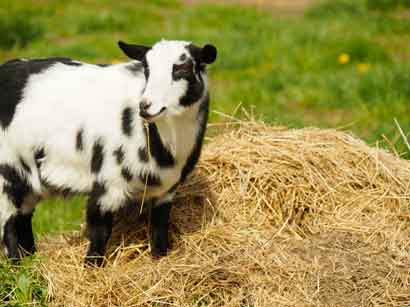
(Black and white goat eating hay)
Hay grown in different fields reflects the soil it came from, the weather it experienced, and the management practices behind it. When hay sources change often, animals are repeatedly asked to adapt to new fiber levels, protein content, and energy availability. Over time, this can put unnecessary stress on their digestive systems.
How Hay Changes Affect Digestion
The digestive systems of livestock depend on stable forage to function efficiently. Horses, cattle, sheep, and goats all rely on gut microbes that adjust to the hay they consume regularly. When that forage changes suddenly, those microbes need time to rebalance. Without a gradual transition, animals may experience digestive discomfort, reduced feed efficiency, or changes in manure consistency.
These issues aren’t always severe, but they can quietly impact overall health. Animals may eat less, show signs of bloating or gas, or become more sensitive to future feed changes. Consistent hay helps maintain a stable digestive environment, which is essential for nutrient absorption and overall well-being.
Nutritional Fluctuations and Animal Performance
Hay quality is closely tied to when and how it’s harvested. Early-cut hay tends to be higher in protein and energy, while later-cut hay often contains more fiber and fewer nutrients. Switching between these types without realizing it can lead to inconsistent nutrition, even when feeding similar amounts.
Over time, these fluctuations can make it harder to maintain body condition, especially for animals with higher nutritional demands. Young, growing animals, working horses, and lactating livestock are particularly sensitive to changes in forage quality. When nutrition isn’t steady, owners may find themselves compensating with additional supplements or grain, increasing feeding costs and complexity.
Feed Acceptance and Wasted Hay
Animals also develop preferences for the hay they’re used to. Differences in smell, texture, and moisture content can affect how readily livestock accept new forage. When hay sources change frequently, animals may eat less or sort through the feed, leaving behind stems or entire flakes.
This not only increases waste but can also result in uneven intake, especially in group-fed situations. Some animals may consume more than others, leading to inconsistencies in health and condition across the herd or stable.
Long-Term Health Impacts of Frequent Hay Changes
Repeatedly switching hay sources can create long-term challenges that aren’t always immediately noticeable. Digestive systems that are constantly adjusting may become more sensitive over time. Animals may struggle to maintain weight, show lower energy levels, or experience recurring digestive upset.
Consistency in forage helps reduce stress and supports immune function by providing predictable nutrition. While occasional changes are sometimes unavoidable, making frequent switches without a transition plan can quietly undermine animal health.
Why Working With a Trusted Hay Supplier Matters
Establishing a relationship with a reliable hay supplier helps ensure more consistent forage quality. A trusted supplier understands their product and can provide insight into cutting schedules, field conditions, and storage practices. This predictability allows livestock owners to feed with confidence, knowing their animals are receiving hay within a familiar nutritional range.
Consistency doesn’t mean every bale is identical, but it does mean fewer surprises. Over time, animals adapt well to steady forage, and owners gain peace of mind knowing their feeding program supports long-term health.
Managing Necessary Hay Transitions Safely
When switching hay sources is unavoidable, gradual transitions are key. Mixing old and new hay over several days allows the digestive system time to adjust. Close observation during this period helps identify potential issues early, before they become more serious.
By prioritizing consistency whenever possible and managing changes carefully, livestock owners can protect animal health while minimizing stress and waste.