What Makes Premium Horse Hay? 7 Signs You're Buying High-Quality Forage
When shopping for hay, it’s easy to assume that every bale is created equal. After all, two bales of orchard grass or timothy hay may look similar from a distance. However, experienced horse owners know that premium horse hay stands apart in ways that directly impact nutrition, digestibility, and overall equine health. Choosing high-quality forage isn’t simply about appearance—it’s about understanding the characteristics that indicate a well-grown, properly harvested, and carefully stored product.
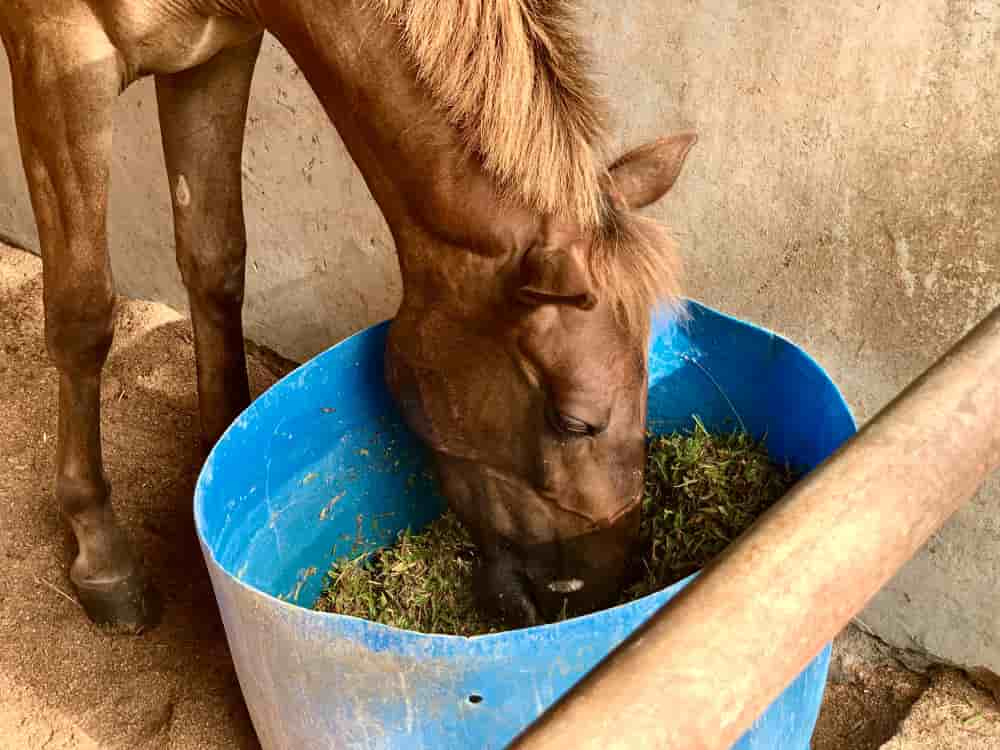
(Brown horse has hay breakfast.)
Quality Starts Long Before the Bale Is Made
Premium horse hay begins in the field. Factors such as healthy soil, proper irrigation, harvest timing, and careful curing all influence the nutritional value of the finished product. Hay that is cut at the correct stage of maturity typically contains more digestible nutrients and softer stems than hay harvested too late.
Once cut, the hay must dry properly before baling. If it’s baled with too much moisture, mold and heat damage can develop during storage. If it’s left in the field too long, weather exposure may reduce nutritional quality. Every step of the production process contributes to the quality that eventually reaches your barn.
Fresh Color Is a Good First Impression
One of the easiest ways to evaluate horse hay is by its color. Premium forage generally has a vibrant green appearance, indicating that much of its nutritional value has been preserved during harvest and storage. While slight color variations are normal, hay that appears dull brown, faded, or sun-bleached may have lost valuable nutrients.
Color alone shouldn’t determine your purchase, but it serves as an excellent starting point when comparing several lots of hay.
A Pleasant Smell Indicates Proper Storage
High-quality hay should have a fresh, sweet, grassy aroma that reflects proper curing and storage. The smell often reminds horse owners of a freshly mowed field, which is usually a positive sign.
Conversely, hay with musty, sour, or moldy odors should be avoided. Unpleasant smells often indicate excessive moisture, poor storage conditions, or mold development that can negatively affect both nutrition and respiratory health.
Taking a moment to smell a bale before purchasing can reveal problems that may not be immediately visible.
Soft, Leafy Hay Provides Better Nutrition
Leaves contain a significant portion of the nutrients found in hay. Premium horse hay typically has a high leaf-to-stem ratio, making it more digestible and palatable for horses. Soft stems are generally easier to chew, especially for senior horses or animals with dental issues.
Excessively coarse or woody hay often indicates a more mature crop that may contain lower digestible energy. While mature hay still has its place in some feeding programs, horses usually benefit from forage that contains abundant leafy material.
Clean Hay Means Healthier Horses
A quality bale should be free from excessive dust, mold, weeds, sticks, rocks, and other foreign materials. Dusty hay can contribute to respiratory irritation, particularly in horses with allergies or conditions such as equine asthma.
Clean hay reflects careful harvesting, handling, and storage practices. Reliable hay suppliers take steps to minimize contamination because they understand that clean forage contributes to healthier animals and happier customers.
Before purchasing, separate a small section of the bale and inspect it closely. A visual inspection often reveals hidden issues that aren’t visible from the outside.
Consistent Bale Quality Matters
One premium bale doesn’t mean much if the next ten are completely different. Consistency is one of the most valuable qualities a hay supplier can provide. Horses have sensitive digestive systems, and frequent changes in forage can increase the risk of digestive upset.
A dependable supplier maintains consistent harvesting practices, stores hay properly, and carefully manages inventory to provide customers with reliable forage throughout the year. Consistency also makes it easier to predict feeding programs and manage overall hay costs.
Knowledgeable Suppliers Add Value
Buying premium horse hay isn’t just about the product—it’s also about the people selling it. Experienced suppliers understand different hay varieties and can recommend the right forage based on your horse’s age, workload, and nutritional needs.
A trustworthy supplier should be willing to answer questions about where the hay was grown, when it was harvested, how it was stored, and what type of animals it is best suited for. That level of transparency helps buyers feel confident in every purchase.
Premium Hay Is an Investment
While premium horse hay may cost more per bale than lower-grade forage, it often provides greater value over time. Better-quality hay is typically more digestible, produces less waste, and may reduce the need for additional supplements. Horses also tend to consume premium forage more willingly, leaving fewer stems behind and maximizing every feeding.
Rather than focusing solely on price, consider the overall value each bale provides. Investing in quality forage can contribute to improved health, better body condition, and fewer feeding challenges throughout the year.
Final Thoughts
Knowing what makes premium horse hay allows horse owners to shop with confidence and make feeding decisions that support long-term equine health. Fresh color, pleasant aroma, leafy texture, cleanliness, consistency, proper harvest timing, and knowledgeable suppliers all play important roles in identifying high-quality forage.
At Ohana Hay, we believe every horse deserves clean, dependable, and nutritious forage. By providing carefully selected hay and exceptional customer service, we’re committed to helping horse owners throughout Washington find the premium hay their animals need to thrive.