What Happens After the Bale Leaves the Field? Handling, Transport, and Storage Mistakes to Avoid
Harvesting hay is just the beginning of the story. Once the bale leaves the field, it enters a critical stage where handling, transport, and storage all influence the quality your animals eventually get to eat. Too often, hay growers and buyers focus on field production but overlook what happens next, and that oversight can be the difference between feed that delivers nutrition and feed that falls short.
In this post, we’ll walk through the post-field journey of hay bales, highlight common mistakes, and show how thoughtful handling preserves feed quality right up to the moment it enters your livestock’s digestive tract.
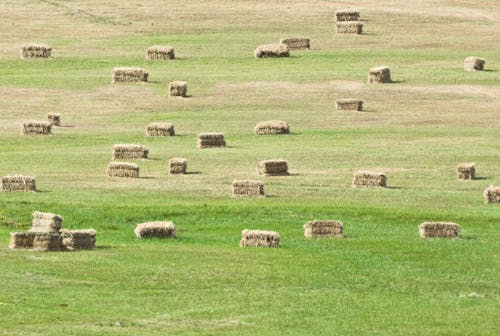
(Scenic Field of Hay Bales Under Bright Sunlight.)
1. Handling Mistakes That Hurt Hay Quality
Proper handling starts in the field and continues every time the bale is moved. The way a bale is picked up and stacked affects its structure, leaf retention, and exposure to moisture. Rough handling can break or bruise the bale, knocking off leaves — the most nutrient-dense part of hay — and creating dust.
A few handling pitfalls to avoid:
- Dropping or dragging bales can loosen leaves and compress stems unevenly.
- Using improperly sized forks or spikes can pierce and damage the bale, leading to moisture entry.
- Stacking directly on bare ground allows the bottom layer to wick up moisture.
Simple improvements — like using the right bale fork, handling gently, and placing bales on pallets or a dry surface — protect hay quality and animal health.
2. Transport Mistakes: What Can Go Wrong on the Road
Transport is often seen as a necessary expense, but how hay is loaded and moved matters more than many people realize. Bales that are stacked incorrectly, tied down poorly, or exposed to rain during transport can lose quality fast.
Here are some common transport challenges:
- Exposure to rain or dew — even lightly damp hay can begin to degrade while in transit.
- Loose loads — shifting bales can rub and break off leaves, reducing nutrient density.
- Improper stacking — unstable piles increase the risk of bale collapse and damage.
If hay gets wet during transport, it’s not just nutrients that are lost — microbial growth and mold can begin before the bale even reaches your storage area. Covering loads with tarps, securing them properly, and avoiding travel through inclement weather whenever possible all help preserve quality.
3. Storage Mistakes That Lead to Hidden Losses
Once your hay reaches the barn or yard, storage becomes the frontline defense for quality. Many hay problems trace back to preventable storage mistakes: moisture, poor ventilation, and exposure to sunlight or rodents.
Moisture is the biggest enemy of stored hay.
Hay stored with a moisture level above about 18% can begin to heat up, grow mold, or even go through spontaneous combustion in extreme cases. Storing hay where water can drip from roofs, where ground seepage occurs, or where rain hits stacks directly quickly degrades feed quality.
Common storage issues include:
- Stacks left uncovered outdoors – exposed bales soak up rain and dew.
- Poor air circulation – lack of ventilation traps heat and humidity within the stack.
- Stacking too tightly against walls or in corners – limits airflow and encourages condensation.
To avoid these problems, keep hay off the ground (on pallets or gravel), under a solid roof or weatherproof tarp, and with enough space between stacks to allow airflow. Elevating hay slightly and ensuring a dry footprint reduces moisture risk significantly.
4. Why Post-Field Handling Matters for Livestock Nutrition
Every mistake in handling, transport, or storage chips away at hay quality. When hay loses leaves, absorbs moisture, or develops dust and mold, the nutrient value available to animals drops. That means:
- Lower energy and protein intake
- Reduced palatability — animals may sort through hay or waste it
- Increased risk of respiratory issues from dust
- Higher incidence of digestive problems in sensitive animals
Good hay handling doesn’t just preserve calories, it preserves nutrient density, reduces feed waste, and supports healthier digestion once hay reaches the trough. The smoother and cleaner the transition from field to feeder, the more value your livestock get from each bale.
In practice, this means your investment in quality hay pays off much more fully when you protect it every step of the way.
Tips for Protecting Hay Quality After the Field
To summarize, here are practical ways to reduce losses after hay leaves the field:
- Use proper equipment and techniques when lifting and moving bales.
- Secure hay loads and protect them from rain during transport.
- Store hay under cover whenever possible, with good ventilation and off the ground.
- Check bales periodically for heat, moisture, or pests.
These practices help ensure that what starts as high-quality, nutrient-rich hay in the field stays that way until it’s in your livestock’s belly.
Final Thoughts
At Ohana Farms, we pour care and expertise into producing hay that’s rich in nutrients and handled from harvest through delivery with quality in mind. But anyone feeding livestock should understand how handling, transport, and storage affect what their animals ultimately receive. Treat hay as a perishable good, because its value is perishable if not protected properly , and you’ll see improved performance, better digestion, and less waste.