The Benefits of Rotational Grazing and Hay Use in Livestock Management
Mycotoxins are toxic substances that certain molds naturally produce when they grow on crops like hay, grains, or silage. They form most often in warm, humid, or poorly stored conditions and can contaminate feed without showing obvious signs of mold. Even in small amounts, mycotoxins can cause health problems in animals—affecting digestion, growth, and immune function—making it crucial to store and handle hay properly to prevent mold growth and toxin buildup.
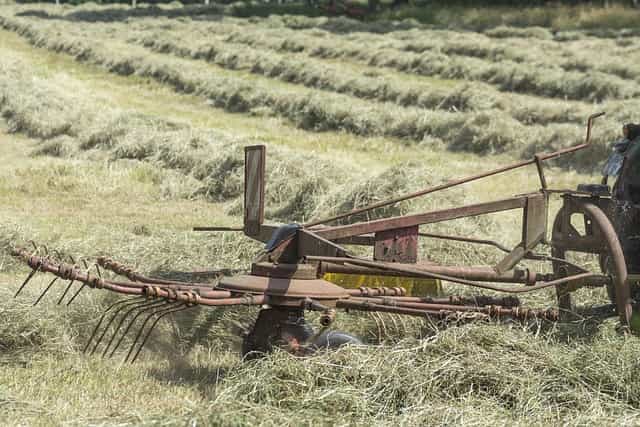
(Hay field with a classic raker.)
Ruminants—such as cows, sheep, goats, and deer—are fascinating animals with a complex digestive system designed to process fibrous plant material like hay and grass. Unlike humans, ruminants have a four-chambered stomach consisting of the rumen, reticulum, omasum, and abomasum. This unique setup allows them to break down cellulose, a major component of plant fiber, into nutrients they can use for energy and growth.
When ruminants eat, they don’t chew their food completely right away. Instead, they swallow large bites of hay or grass, which enter the rumen, where microbes begin breaking down the fibrous material. Later, the animal regurgitates this partially digested feed—known as cud—back into its mouth for more thorough chewing. This process, called rumination, helps grind the hay into smaller particles, increasing the surface area for microbial digestion and improving nutrient absorption.
But did you know that the particle size of the hay you feed plays a major role in how efficiently this system works? Let’s explore why it matters and how it can affect your animals’ health and performance.
The Role of Hay Particle Size in Digestion
Hay particle size refers to how coarse or finely chopped the hay is. Larger particles take longer to chew and digest, while smaller particles break down more quickly. The balance between the two determines how well a ruminant’s digestive system functions.
Larger Particles: Promoting Healthy Rumination
When hay particles are longer—typically over one inch—they stimulate chewing and saliva production. Saliva is crucial for maintaining the proper pH balance in the rumen, preventing acidosis and other digestive disorders. The physical act of chewing also keeps the rumen wall healthy and encourages consistent cud chewing, which helps the animal fully utilize the nutrients in its feed.
Longer hay particles are especially important for cattle and dairy cows, as they rely on steady rumination to process their feed efficiently. Without enough long fiber in their diet, these animals can experience reduced cud-chewing time, lower milk fat content, and even rumen upset.
Smaller Particles: Easier to Digest, but Riskier in Excess
On the other hand, finely chopped hay can pass through the rumen more quickly, allowing nutrients to be absorbed faster. This might sound like a good thing, but too much finely ground hay can reduce the animal’s natural rumination activity. If particles are too small, they spend less time in the rumen, leading to less microbial fermentation and less saliva production.
This imbalance can cause digestive issues such as bloating, acidosis, or reduced feed efficiency. In short, too fine means faster digestion—but not always better nutrition.
Finding the Right Balance
The key to optimal digestion in ruminants is balance. Your hay should contain enough long fiber to promote chewing and rumen stability, while also being soft and digestible enough for efficient nutrient absorption.
For most livestock, hay that has a mix of particle sizes works best. Grass hays like Orchard or Timothy tend to have naturally longer stems that provide good structure, while Alfalfa offers softer leaves that break down easily. Mixing these hay types can help you achieve the right balance for your animals’ digestive needs.
It’s also important to consider how your hay is processed. Mechanically chopped or pelleted hay often has smaller particle sizes, which can be beneficial for older animals or those with dental issues. However, feeding pelleted hay exclusively may reduce rumination time, so it’s wise to combine it with traditional baled hay when possible.
How to Tell if Your Animals Are Getting the Right Hay Texture
Your animals will often tell you if their hay’s particle size isn’t right. Signs to watch for include:
- Reduced cud chewing or less time spent ruminating
- Loose manure or changes in stool consistency
- Decreased feed intake or slower weight gain
- Signs of discomfort or bloating
If you notice any of these, it might be time to adjust the type or cut of hay you’re feeding.
Why Quality Hay Matters Most
Beyond particle size, hay quality plays a major role in digestion. Fresh, green hay that’s free of dust, mold, and weeds provides the nutrients ruminants need while supporting their natural digestive rhythms. Choosing high-quality hay from trusted local suppliers ensures your animals are getting the best nutrition possible—without compromising their health.
At Ohana Farms, we understand how important quality and texture are for your livestock’s diet. Our hay is carefully harvested and stored to maintain the ideal balance of nutrition and digestibility. Whether you’re feeding cattle, goats, or sheep, our premium hay varieties are designed to keep your animals healthy and thriving.
Explore our Products Page to find hay that meets your animals’ needs year-round.