The Hidden Costs of Poor-Quality Hay: Why Cutting Corners Can Hurt Your Herd
When hay prices rise or supply gets tight, it’s natural to search for a bargain. But inexpensive hay can end up being the most costly choice you make for your farm. What looks like a financial win often turns into higher feed bills, more waste, and health problems that could have been avoided. Because hay is the foundation of most livestock diets, the quality of each bale has a direct impact on your animals’ condition, comfort, and long-term performance.
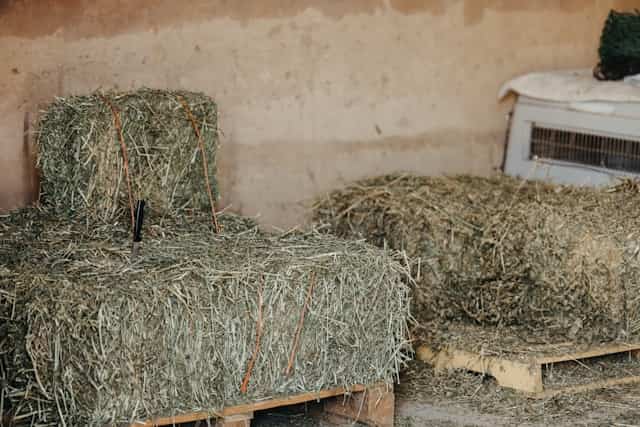
(A couple of green hay bales on wooden pallets.)
At ‘Ohana Farms, we’ve seen how dramatically good hay can transform a herd. Many clients come to us after struggling with inconsistent or low-quality feed, and the change in their animals’ health is often immediate. You can explore our available hay types any time here:
Why Poor-Quality Hay Lacks the Nutrition Your Herd Needs
The biggest problem with bargain hay is that it rarely delivers the nutrients livestock depend on. When hay is cut too late, baled too wet, bleached by the sun, or rained on before baling, the nutritional value drops dramatically. At that point, animals may feel full, but they aren’t truly being nourished — and that imbalance eventually shows.
Poor-quality hay can lead to:
- Slower weight gain or weight loss
- Low energy and dull coats
- Poor performance in working animals
- Reduced milk production
- Difficulty maintaining body condition during winter
Owners often try to fix these issues with grain, mineral tubs, or supplements. But those products can become expensive quickly, and they rarely solve the root of the problem — a lack of nutrient-rich forage. When you compare these added costs to the slightly higher price of quality hay, the “cheap” option doesn’t stay cheap for long.
When Low-Quality Hay Leads to Health Problems
Nutrition isn’t the only concern. Poor hay can introduce issues that require veterinary care — some of them serious. Mold, dust, blister beetles, weeds, and mycotoxins are all more common in lower-grade hay. Even if the bale looks passable from the outside, hidden problems can still be present, that is why it is good to test the hay to ensure proper nutritions.
Livestock may experience:
- Respiratory irritation from dust or mold
- Colic and digestive trouble from stemmy or coarse forage
- Toxin exposure from mold or contaminants
- Allergies triggered by dust and debris
- Reduced immunity, leaving animals more vulnerable to illness
Vet bills rise, supplements rise, and the stress of managing health problems becomes overwhelming. And in many cases, these issues could have been avoided by starting with quality feed in the first place.
Feed Waste: One of the Most Overlooked Costs
Animals know immediately when hay isn’t good. They pick through it, eat only the soft pieces, and leave piles of rejected stems behind. Much of that “cheaper” hay never ends up being eaten — and wasted hay is the same as wasted money.
Low-quality hay usually creates:
- Higher feed waste
- More mess in stalls and paddocks
- Extra hay consumption because animals aren’t truly full
- More time spent cleaning and rebaling
Good hay, on the other hand, is soft, fragrant, and palatable. Your animals will eat more of it, digest more of it, and waste far less. Over time, this alone offsets the price difference.
The Difference You See in Your Animals on Good Hay
There is a noticeable, physical change when animals switch to higher-quality forage. Body condition improves, energy levels stabilize, and animals tend to be calmer and more comfortable. Their coats shine, their immune systems strengthen, and they maintain weight more consistently—even during stressful seasons.
High-quality hay supports:
- Steady growth
- Better performance in working animals
- Higher milk production
- Improved digestion
- Stronger hooves and healthier coats
- Overall longevity and comfort
This is why many owners refer to premium hay as “cheap insurance.” It protects the long-term well-being of the animals that depend on you.
Why Investing in Quality Hay Pays Off
When comparing the hidden costs of poor hay to the benefits of premium forage, the value becomes clear. Good hay helps reduce supplement costs, supports better animal health, improves productivity, and minimizes feed waste. It often saves more money than it costs — and gives livestock owners peace of mind.