Hay Color, Smell, and Texture: What These Signs Really Tell You About Feed Quality
When you’re standing in front of a bale, lab results aren’t always available, but your senses are. Long before hay reaches the feeder, its color, smell, and texture can reveal a lot about how it was grown, harvested, and stored. Learning how to read these signs helps livestock owners avoid poor-quality feed, protect animal health, and make smarter buying decisions.
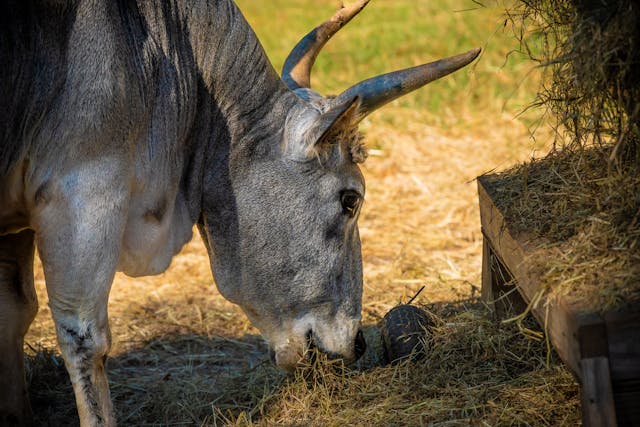
(Close-up of Gray Cow Grazing on Hay Outdoors.)
What Hay Color Really Indicates
Color is often the first thing people notice, and for good reason. High-quality hay typically has a bright green or light green hue, which signals that it was cut at the right stage of maturity and cured properly. Green color suggests good nutrient retention, especially protein and vitamins that are sensitive to sun exposure.
Hay that appears yellow, brown, or sun-bleached doesn’t automatically mean it’s unusable, but it can indicate overexposure to sunlight, delayed baling, or weather damage. These factors often reduce nutritional value, even if the hay still smells fine. Dark brown or black patches, however, can be a red flag for heat damage or moisture issues during storage.
Smell: One of the Most Reliable Quality Clues
Healthy hay should smell fresh, clean, and slightly sweet, similar to cut grass or a pasture after mowing. This smell indicates proper drying and minimal mold or bacterial growth.
If hay smells musty, sour, or damp, it’s often a sign of excess moisture during baling or storage. Mold growth isn’t always visible, but your nose can detect it early. Feeding moldy hay can irritate airways, reduce intake, and lead to digestive or respiratory issues, especially in horses and young animals.
A sharp, burnt odor can indicate heat damage, which occurs when hay is baled too wet and begins to ferment internally. While animals may still eat it, heat-damaged hay often has reduced protein availability.
Texture Tells You About Maturity and Handling
Running your hand through a bale reveals a lot about how the hay was harvested. Soft, pliable stems and intact leaves usually indicate earlier cutting and careful handling, which translates to better digestibility and nutrient availability.
Hay that feels coarse, brittle, or overly stemmy often comes from plants harvested too late in maturity. While it can still provide roughage, livestock may sort through it, leaving behind tougher stems and increasing waste. Excess dust or leaf shatter can also signal overly dry handling or poor storage conditions.
Why These Signs Matter for Livestock Health
Animals naturally eat more, and waste less, when hay is palatable. Hay with good color, smell, and texture encourages consistent intake, which supports digestion, weight maintenance, and overall performance. Poor-quality hay, even when fed in larger amounts, can lead to lower nutrient absorption and higher feed costs.
For livestock owners, learning to evaluate hay visually and physically adds an extra layer of confidence when purchasing feed, especially when buying in bulk or planning for seasonal needs.
Choosing Hay You Can Trust
While forage testing provides precise data, sensory evaluation remains a valuable first step. Working with a trusted hay supplier who prioritizes proper cutting, curing, and storage ensures that what you see, smell, and feel reflects quality you can rely on.
Explore our selection of hay here: Ohana Farms Premium Hay.